.png)


Creative Debt: Why Brands Lose Attention Long Before They Lose Customers
-
Marketing Garage
- June 19, 2026
Every brand wants growth.
- More reach.
- More engagement.
- More enquiries.
- More conversions.
- More people remembering the brand.
But sometimes, the problem is not the ad budget. It is not the algorithm. It is not even the audience.
Sometimes, the brand has simply become creatively tired.
- The posts are going out.
- The captions are being written.
- The reels are being uploaded.
- The website is still live.
- The logo is still there.
Everything looks active from the outside.
But slowly, something starts fading.
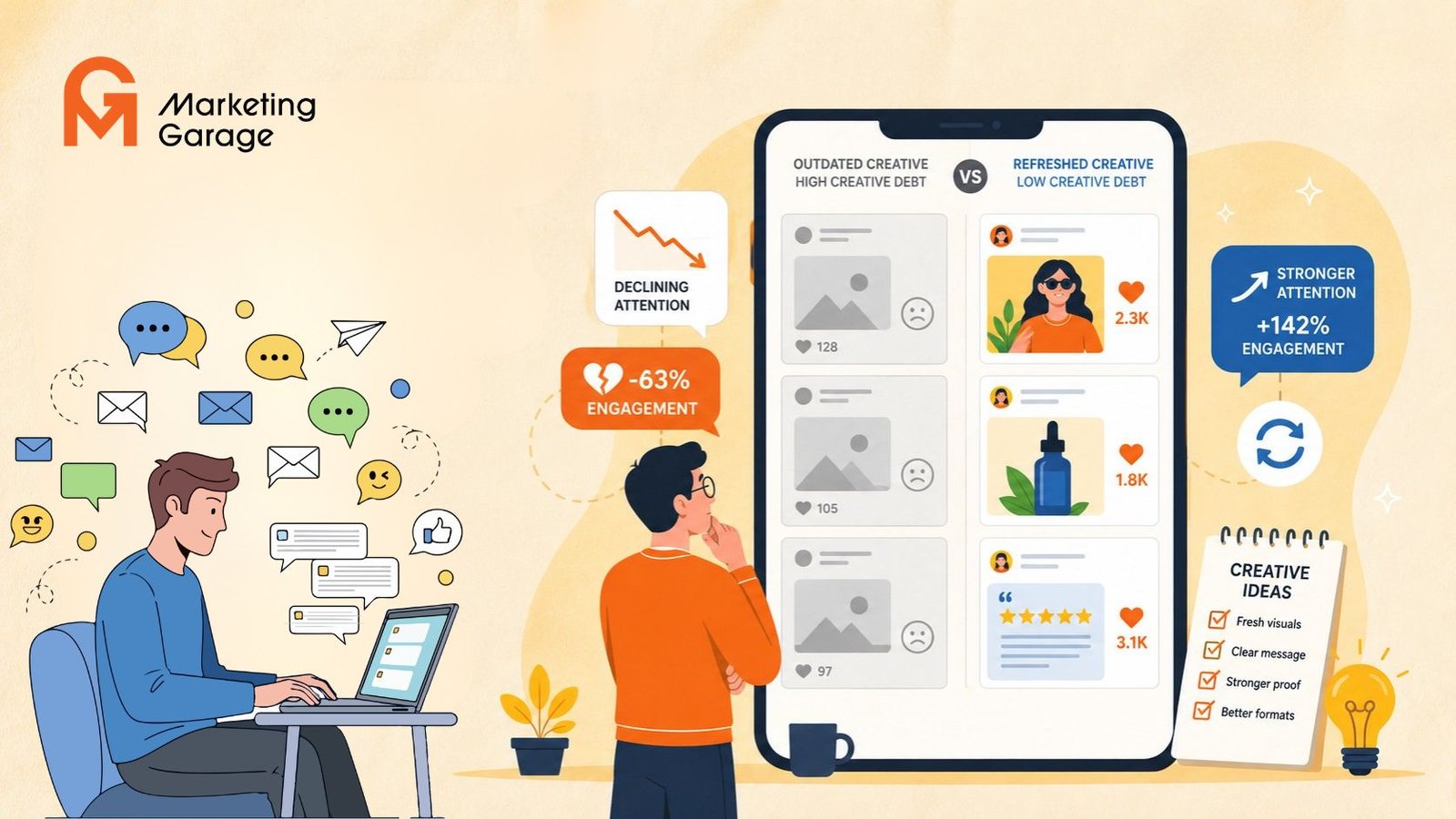
The audience stops reacting. The content stops feeling fresh. The visuals start looking repetitive. The brand begins to feel behind the market, even if the business is still doing good work.
This invisible build-up is called creative debt.
And in today’s attention economy, creative debt can quietly damage a brand long before the brand even realises it.
What Is Creative Debt?
Creative debt is what happens when a brand keeps using outdated, repetitive, or low-impact creative communication while the market around it keeps evolving.
It builds slowly.
- One reused template.
- One outdated website section.
- One boring caption format.
- One campaign that looks like the last campaign.
- One video style that has not changed in months.
- One brand visual that no longer feels premium.
- One social feed that looks active but not exciting.
At first, it may not look like a big problem. But over time, these small creative compromises pile up.
The brand may still be present, but it stops feeling progressive.
And that is dangerous.
Because people do not always unfollow a brand immediately. They simply stop noticing it.
The Real Problem: Brands Think Posting Means Progress
This is one of the biggest mistakes brands make.
They assume that because content is going live regularly, the brand is moving forward.
But posting is not the same as progressing.
- A brand can post every day and still feel stuck.
- A brand can upload reels and still feel outdated.
- A brand can run ads and still fail to build recall.
- A brand can have a website and still lose trust because the design feels old.
- A brand can be active on social media and still be creatively invisible.
Activity creates presence. Creativity creates attention.
And attention is what modern brands are really competing for.
Why Creative Debt Builds So Easily
Creative debt usually does not happen because a brand is careless. It happens because everyone gets busy.
- Campaigns need to go live.
- Offers need to be announced.
- Events need to be covered.
- Leads need to be generated.
- Social media needs to be updated.
- Clients need quick designs.
- Teams need fast approvals.
In that rush, brands start choosing convenience over freshness.
- The same layout gets reused.
- The same hooks get repeated.
- The same type of reel gets edited again.
- The same brand line appears everywhere.
- The same stock-style visual language continues.
And because nothing is technically “wrong,” nobody fixes it.
But the audience feels it.
They may not say, “This brand has creative debt.” They simply feel, “I’ve seen this before.”
That feeling is enough to reduce attention.
The Audience Evolves Faster Than Most Brands
The internet has trained audiences to expect freshness.
People are exposed to hundreds of visuals, reels, ads, creators, campaigns, edits, memes, and brand messages every single day. Their taste evolves quickly. Their expectations rise without warning.
- What looked premium two years ago may look average today.
- What felt modern last year may feel overused now.
- What worked for engagement six months ago may feel predictable today.
This does not mean a brand has to chase every trend. In fact, blindly chasing trends can weaken identity.
But a brand must keep evolving its creative language.
The goal is not to become unrecognisable. The goal is to stay relevant without losing the brand’s core personality.
That balance is where strong creative direction matters.
Signs Your Brand Has Creative Debt
Creative debt is not always obvious, but there are signs.
- Your posts look good individually, but the feed feels repetitive.
- Your audience sees your content but does not respond.
- Your competitors suddenly feel more modern.
- Your website does not match the quality of your current work.
- Your ads are running, but the creative feels forgettable.
- Your videos look polished, but the storytelling feels flat.
- Your brand voice sounds the same in every caption.
- Your campaigns are active, but they do not create conversation.
The most dangerous sign is this: People know your brand exists, but they do not feel anything new about it.
That is when creative debt starts affecting perception.
Creative Debt Is Not Just a Design Problem
Many people think creative debt only means outdated visuals.
But it is much bigger than that.
Creative debt can exist in design, copy, video, brand voice, campaign thinking, website experience, social media structure, photography, editing style, and even the way a brand presents offers.
- A brand can have good designs but weak messaging.
- A brand can have good videos but poor hooks.
- A brand can have a nice logo but an outdated website.
- A brand can have regular posts but no campaign thinking.
- A brand can have strong products but boring storytelling.
Creativity is not decoration. It is how the brand is experienced.
So when creative quality becomes stale, the brand experience becomes stale too.
Why Creative Debt Affects Business
Attention is the first step of conversion.
- Before someone enquires, they must notice.
- Before they trust, they must feel interested.
- Before they buy, they must believe the brand is relevant.
Creative debt weakens this journey.
- If the brand looks outdated, people may assume the business is outdated.
- If the content feels repetitive, people may stop engaging.
- If the website feels old, people may hesitate to enquire.
- If the videos feel generic, people may forget the message.
- If the campaign lacks freshness, the brand may need to spend more money to get the same attention.
That is the hidden cost of creative debt.
It does not always show up as one big failure. It shows up as slow decline.
- Lower engagement.
- Lower recall.
- Lower excitement.
- Lower trust.
- Higher ad fatigue.
- Higher dependency on discounts and paid reach.
By the time the numbers fall, the creative damage has already been building for months.
The Difference Between Brand Consistency and Creative Repetition
Consistency is good. Repetition is not.
- Consistency means the brand feels recognisable.
- Repetition means the brand feels predictable.
- Consistency keeps the identity strong.
- Repetition makes the audience bored.
A strong brand should have a clear visual language, tone, and personality. But within that identity, there should be movement. There should be freshness. There should be new formats, new hooks, new storytelling styles, new campaign ideas, and new ways of showing value.
The song should sound like the same artist. But every track cannot be the same tune.
That is how brands should evolve creatively.
How Brands Can Start Reducing Creative Debt
The first step is not to throw everything away. It is to audit honestly.
Ask:
- Does our brand still look as good as the work we do?
- Does our website create confidence within the first few seconds?
- Do our social media posts feel fresh or familiar?
- Are our reels telling stories or just filling the calendar?
- Are our campaigns built around ideas or just announcements?
- Is our brand voice memorable or generic?
- Would we stop and look at our own content if it came on our feed?
These questions reveal where the debt has built up.
Then the brand can start refreshing key areas:
- Update the content formats.
- Improve the campaign hooks.
- Refresh the visual system.
- Upgrade the website experience.
- Create stronger video storytelling.
- Build new design templates.
- Introduce better brand photography.
- Develop sharper captions and messaging.
- Document real proof and real moments.
- Create campaigns instead of isolated posts.
Small improvements, done consistently, can make a brand feel alive again.
Why Creative Maintenance Should Be Ongoing
Brands often refresh their creative identity only when things feel outdated. But by then, the audience has already moved ahead.
Creative maintenance should be continuous.
Just like a business reviews sales, operations, finance, and performance, it should also review its creative presence.
- What is working?
- What feels tired?
- What needs a new format?
- What has the audience stopped responding to?
- What should be retired?
- What can be upgraded?
This kind of regular creative check-up keeps a brand sharp.
Because in the digital world, freshness is not a luxury. It is survival.
The Role of a Creative Agency
A good creative agency does not just make posts look better.
It helps the brand stay culturally and visually relevant. It identifies what needs to evolve, what needs to stay consistent, and what needs to be completely reimagined.
At Marketing Garage, we believe every brand needs a creative system that moves with the market. A system that does not only produce content, but improves the way the brand is seen, remembered, and trusted.
Because the best creative work is not just attractive. It keeps the brand alive in the audience’s mind.
That is what reduces creative debt.
Conclusion: Attention Is Lost Quietly
Brands rarely lose attention overnight.
They lose it slowly.
- One repetitive post at a time.
- One outdated campaign at a time.
- One boring visual at a time.
- One weak hook at a time.
- One ignored brand moment at a time.
Creative debt builds in silence, but its impact becomes loud when the audience stops caring.
The good news is that it can be fixed.
With sharper storytelling, stronger visuals, better video formats, updated websites, fresher campaigns, and a clearer creative direction, brands can regain attention and rebuild excitement.
Because in today’s market, being present is not enough.
- A brand must feel alive.
- It must feel current.
- It must feel worth noticing.
And the brands that keep paying attention to their creative health will always stay one step ahead of the ones that simply keep posting.
Contact Us
Like exploring new dimensions in art, we seek out every opportunity to create meaningful impact.
-
 100x
100x
Boost your social Presence
-
 100x
100x
Reach worldwide